
Color Label Solutions
What a Month of Sun and Rain Really Does to Dye vs. Pigment Ink
Sep
If you’ve spent any time researching label printers, you’ve run into the same line over and over: pigment ink holds up to light and time better than dye ink. It’s true, but it’s also usually stated without any real proof behind it, just a general claim borrowed from the ink industry at large.
We wanted to see it for ourselves. So we printed the same label design on the same roll of matte label paper, one copy from a printer running pigment ink and one from a printer running dye ink, mounted both outside a south-facing window, and left them there for 30 days. We ran this during Costa Rica’s rainy season, so on top of sun exposure, both labels also picked up real rain and humidity along the way.
This isn’t a lab test. There’s no spectrophotometer involved, just a window, a camera, and a month. But it’s real, and it’s more than you’ll find backing up most of the durability claims floating around out there, including some of our own before now.
The setup
To keep this fair, we controlled for what we could:
- Same label design, same roll of media. Both printers ran the identical matte facestock, so any difference we saw would come from the ink, not the material underneath it.
- Same placement, same timeframe. Both labels went up outside the same south-facing window on the same day and came down together 30 days later.
- A dark control for each ink type. One extra label from each printer went into a drawer instead of outside, untouched for the full 30 days, so we’d have a baseline with no light or weather exposure at all.
One honest limitation to flag: since the labels were outside during rainy season, sun and moisture were both in play the whole time. We can’t cleanly separate how much of the day-30 change came from UV versus rain and humidity. What we have is closer to a real-world outdoor durability test than a pure light-fade test, which arguably makes it more useful if you’re labeling anything that lives outside or in a humid environment, just worth knowing the two factors weren’t isolated.
Day 0
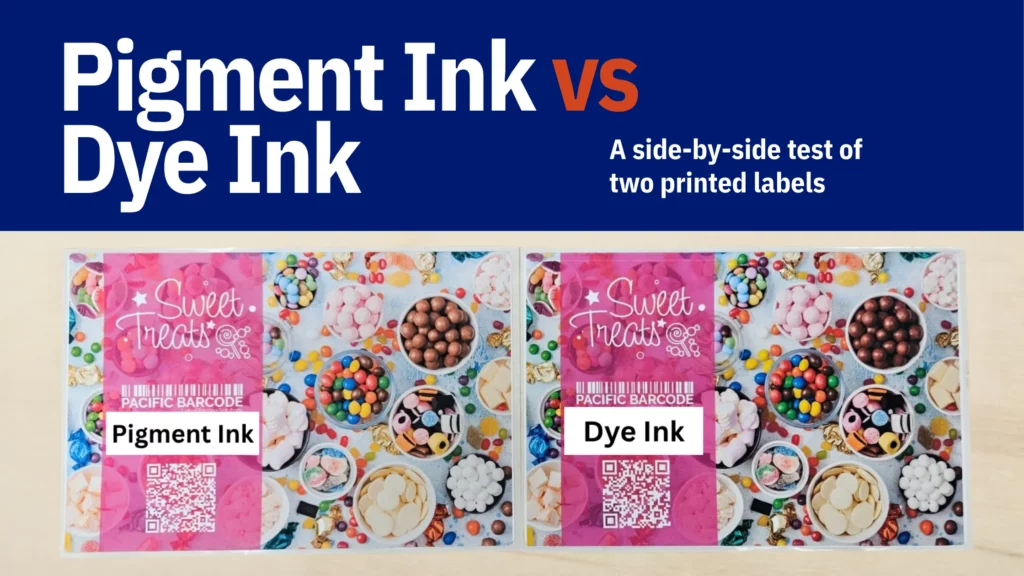
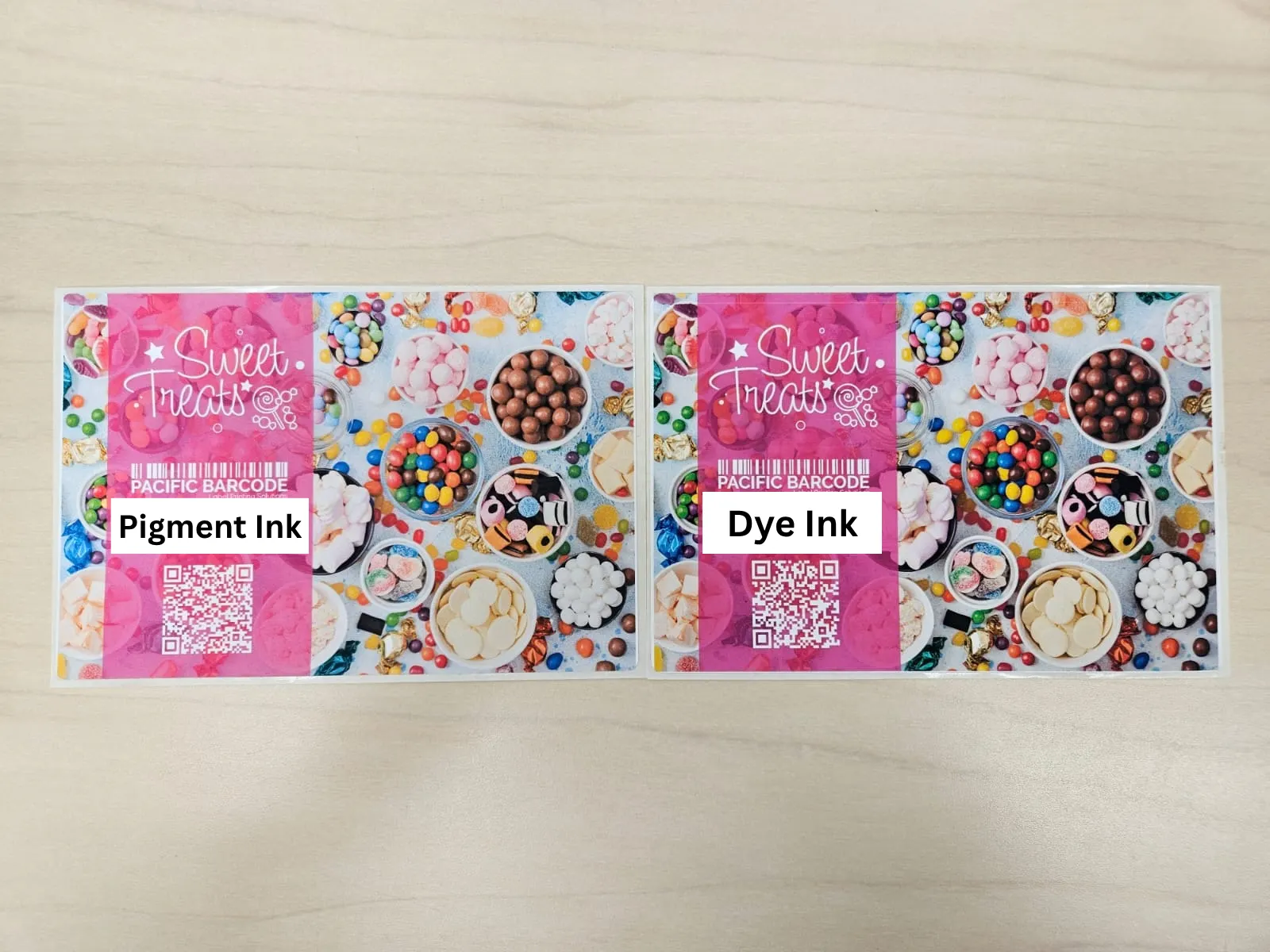
Here’s how both labels looked on day one, right after they went up.
Day 15
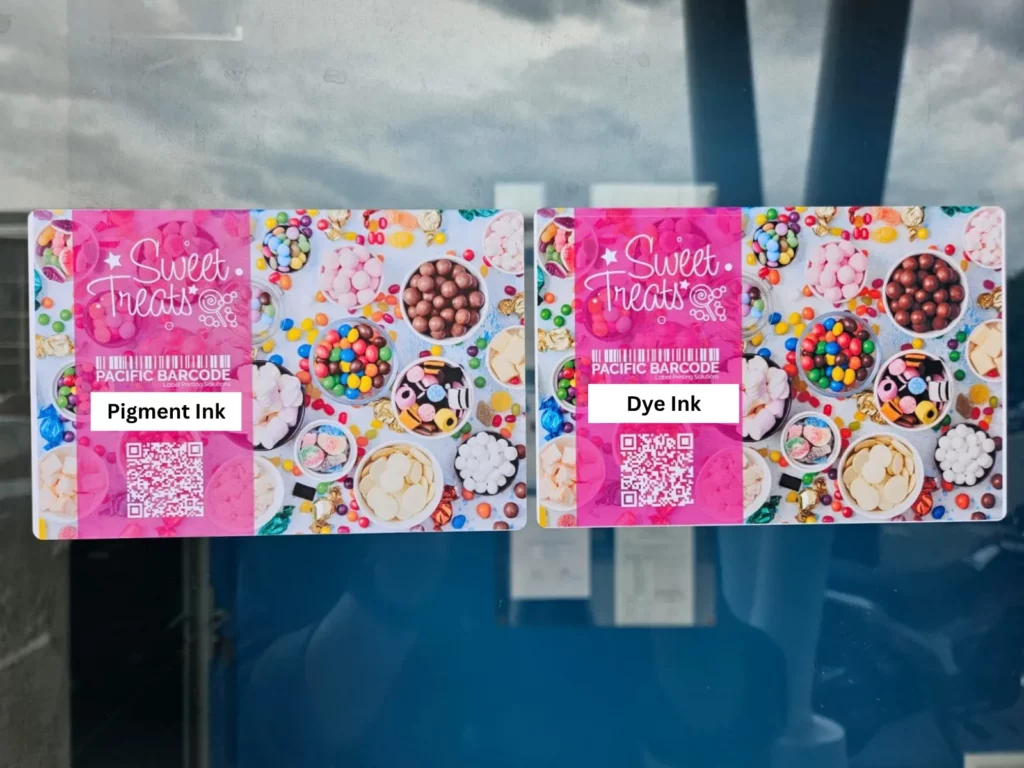
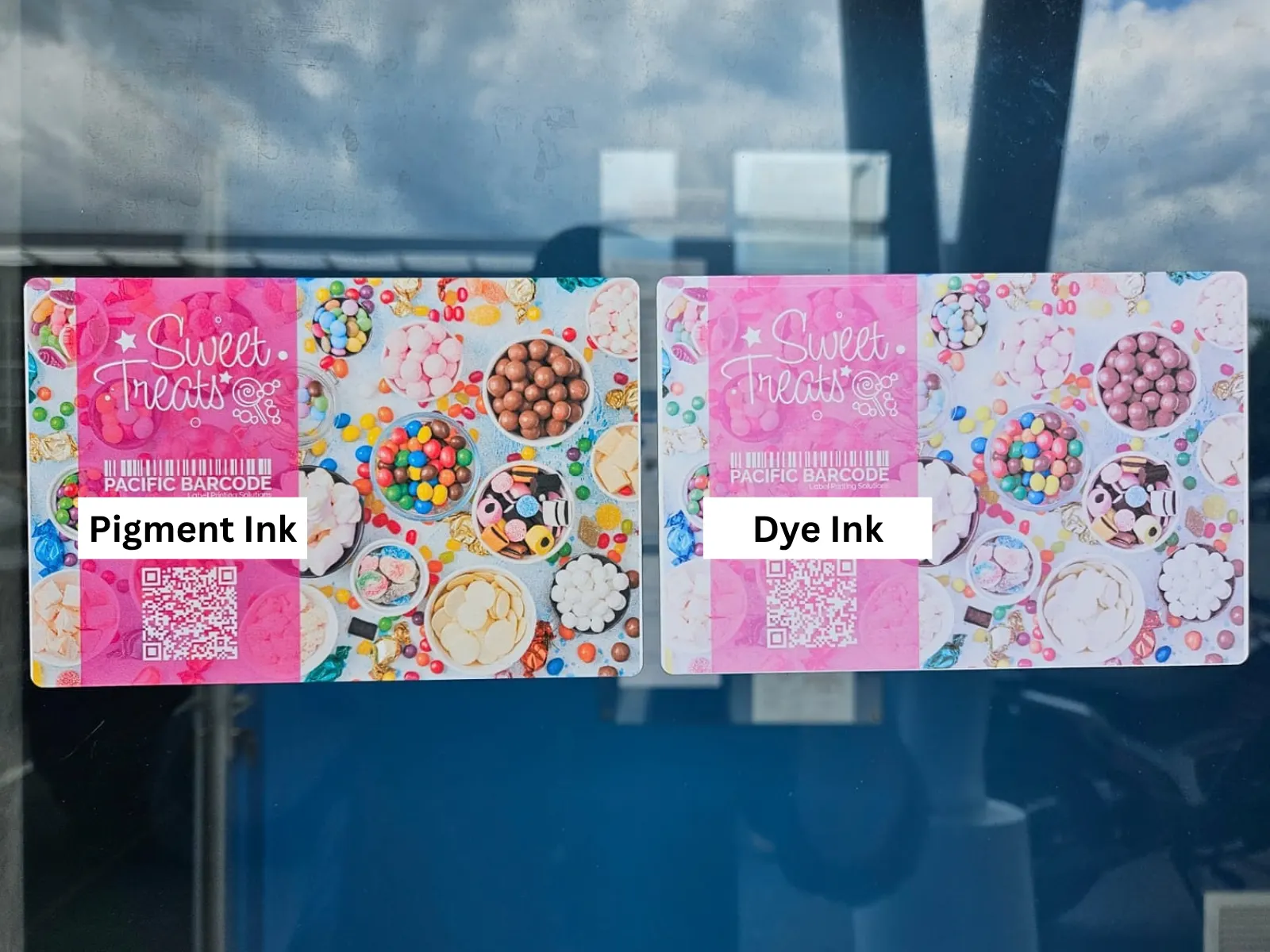
Fifteen days in, the difference is already visible. The dye label is noticeably paler and flatter than the pigment label, which is still holding its color.
Day 30
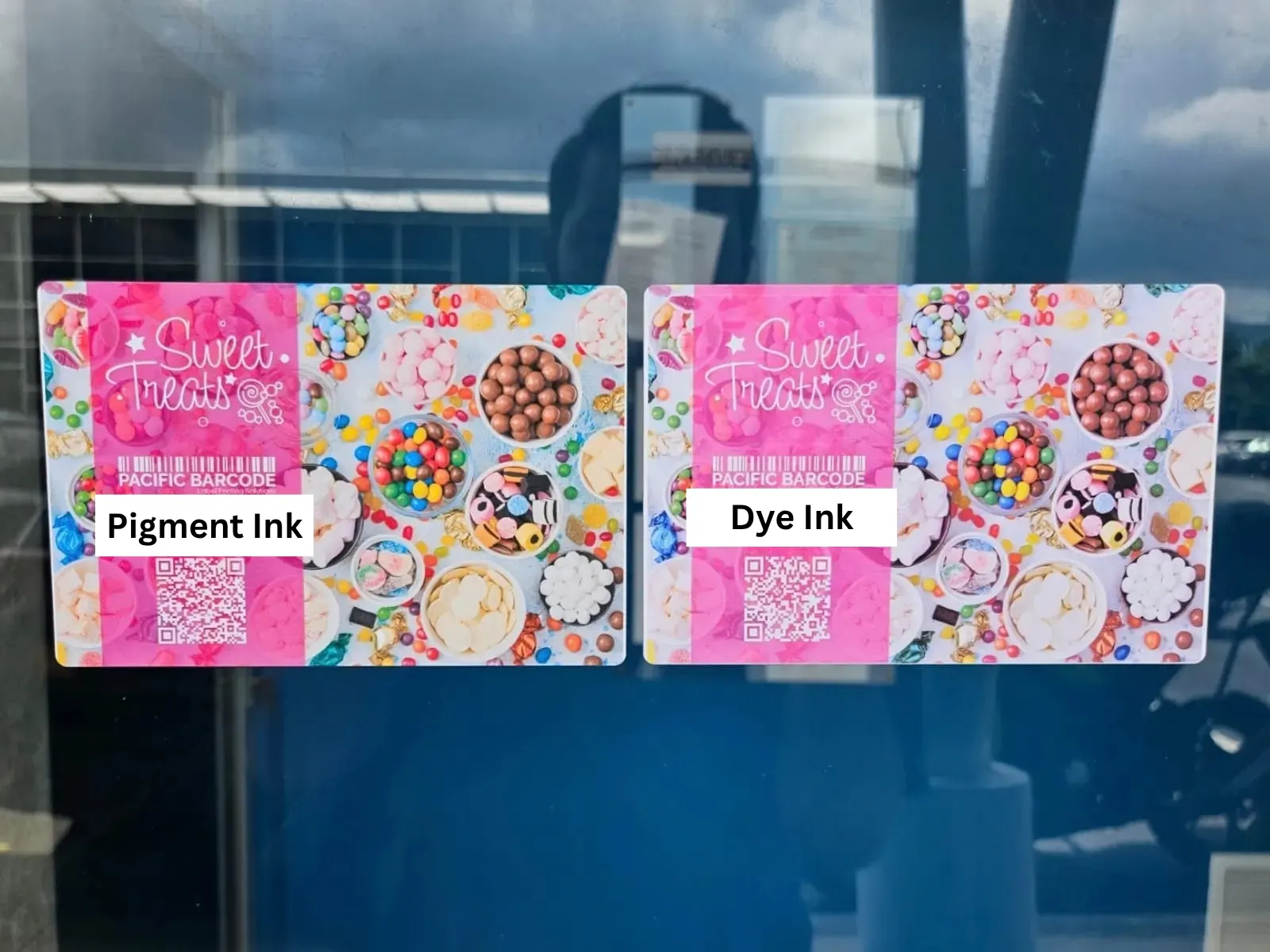
This is where the two inks clearly separate.
The pigment label still shows true color. The chocolate malt balls in the design still read brown, and the magenta background stripe is still strong.
The dye label has visibly shifted. The same malt balls now read closer to pink or mauve than brown, and the background stripe has noticeably lightened. Set side by side, the difference isn’t subtle.
Worth noting: this is a color accuracy issue, not a functional one. We scanned the barcode and QR code on both labels at day 30 and both read correctly, no issues. So the takeaway isn’t that dye ink “fails” after a month in the sun, it’s that the branding no longer looks true to how it was designed.
The control samples
The labels we kept in the drawer, away from light and weather entirely, look consistent with the day-one color shown earlier in this post; no visible shift on either ink type. We don’t have a separate day-one photo of these exact control pieces, but they came from the same print run as the window samples, so that earlier shot is a fair reference for how they started. Between the two controls matching each other and the outdoor samples clearly diverging, sun and moisture exposure together are the most likely explanation for what changed.
What this means for choosing ink
Nothing here should surprise anyone who’s read the chemistry side of this before, but now there’s a real photo to point to instead of a borrowed claim:
- Pigment ink is the better call for anything that’s going to sit somewhere with real light exposure over weeks or months: window displays, retail shelves near sunlight, products with a long shelf life, or anywhere labels are exposed to outdoor conditions or humidity.
- Dye ink still has real advantages, generally more vibrant straight off the printer and often lower cost per label, and it’s a fine choice for anything short-lived: seasonal packaging, promo runs, indoor products that turn over fast.
For a fuller breakdown of the two ink types, including cost and print-quality differences, see our Dye vs. Pigment Inks guide.
